

Oh, hello September!
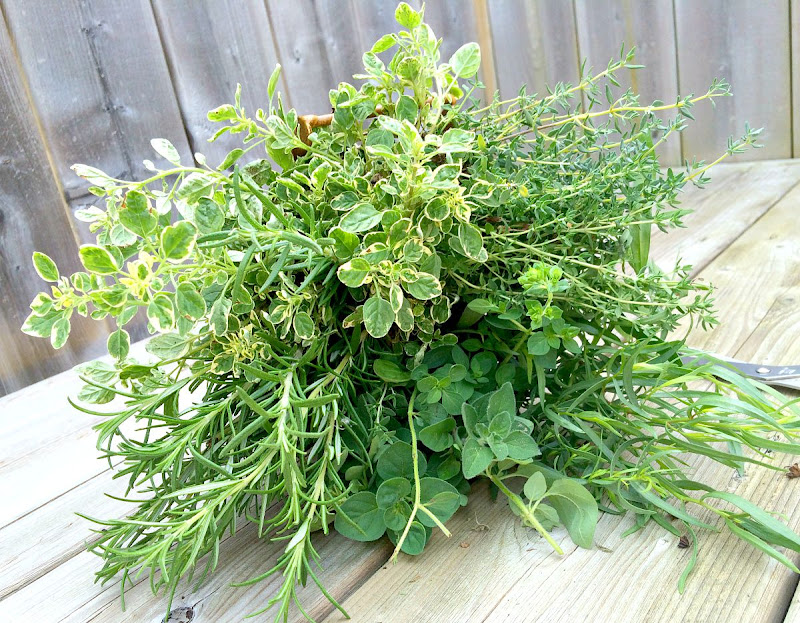
Was it it only 2 and a half months ago when hubby and I planted herbs in our veggie garden {posted here}? For the last month or so, I have been snipping fresh herbs from the garden as needed for this and that recipe. I have been pampered this way and I know some good things never last. So, I am preparing to prolong the goodness of my valued herbs for the coming winter months {which by the way is just around the corner if you live in the Great White North!}
Sharing with you how I do it here at Birdsong.
Harvesting Herbs for Drying and/or Freezing:


- The peak time to harvest {then dry or freeze} herbs is right before the herb starts flowering. This is the time when the flavourful and aromatic oil content is at its highest level.
- Harvest in mid morning or when the dew is dry to prevent molding.
Cleaning Herbs for Drying and/or Freezing


- Make sure the herbs are free from dirt and insects {like this beautiful baby caterpillar} by either gently rinsing them but this process may also remove essential oil from the leaves so I prefer gently shaking each stem to remove impurities.
Drying Herbs:


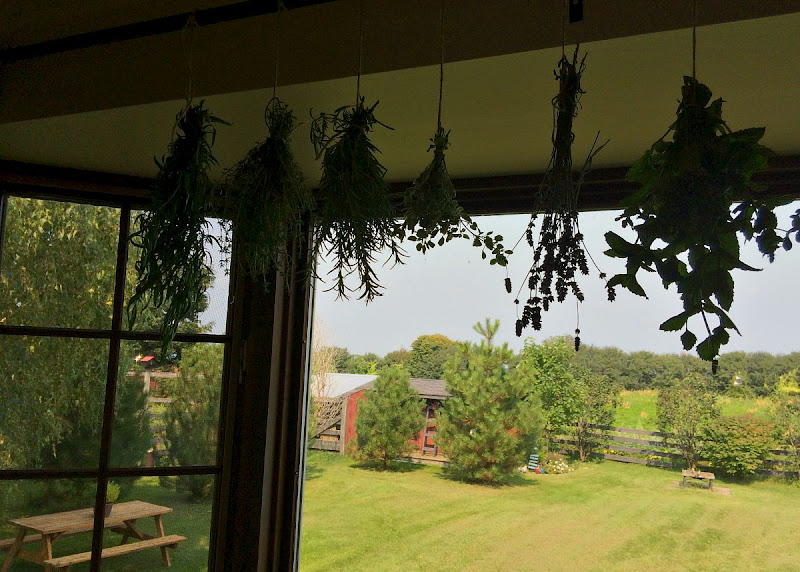
- Drying herbs can be done either by air dry {practical for herbs with low moisture content like rosemary, oregano, thyme and sage} or through food dehydrator or ordinary kitchen oven {best method for herbs with high moisture content like basil, tarragon and mint}.
- I always resort to air drying by simply tying a piece of string to a bunch of the same herb and hanging them upside down in a warm room with good air ventilation/circulation. Avoid the kitchen because of the moisture generated in the room when cooking.
- If the weather is not too hot and there is a enough breeze outside, I hang my herbs in a partly shaded area {direct sunlight will burn the leaves resulting to discoloration} for a good 3 hours then continue drying them inside the house for most part of the day.
- Regularly check herbs for signs of mold or mildew.
- It usually takes 3 weeks for my herbs to be completely dry and ready for storage.
Freezing Herbs:
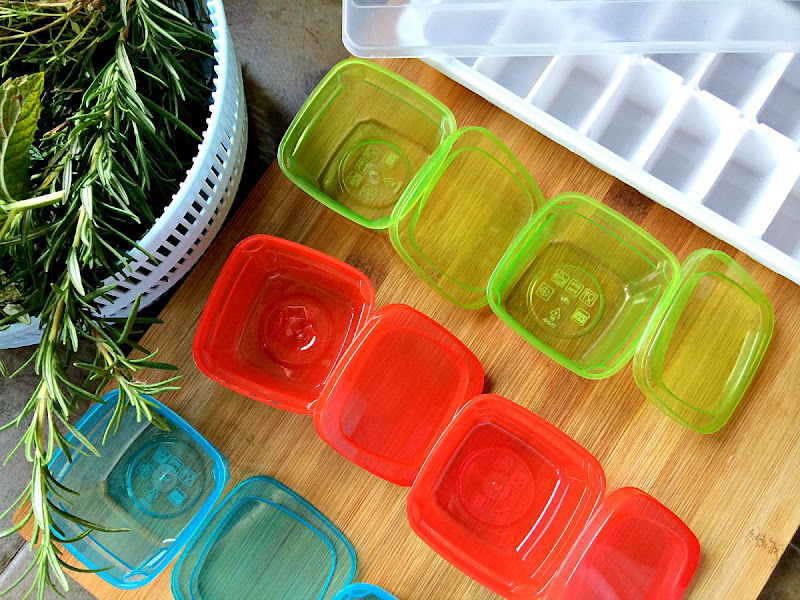
- Use plastic containers for easy removal of frozen herbs. I use ice cube tray and color coded containers for easy identification specially when I am freezing more than 2 herbs.
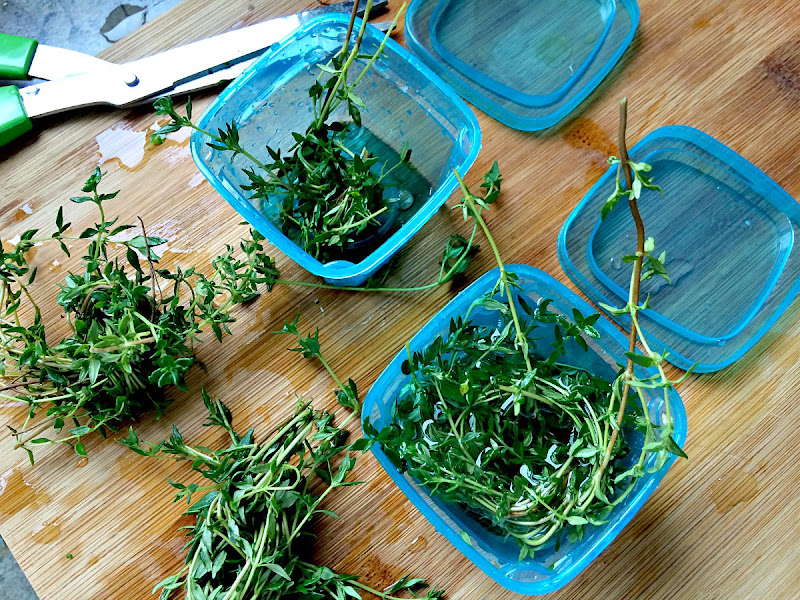

- For thyme. I tie small bundle of sprigs together and put 2-3 bundles in each water filled container. I do this because when I use thyme in my recipe. I normally use a sprig or two.
- For tarragon, I remove the leaves from the stem before placing them in water filled containers because that's the way I normally use them

- For oregano, because I use them a lot like basil. I prefer to freeze them in water filled ice cube trays.

- Freeze and thaw as needed!
I like to have both dried and frozen herbs in the winter months There are just some recipes that truly calls for fresh herbs like omelettes, Margherita pizza or simply topping a dessert with fresh mint leaves. Dried herbs on the other hand have its own uses like when I'm making soup or braising beef, for example. Don't forget, dried herbs are 3 times more potent or flavourful than its fresh counterpart {example : 1 tablespoon of fresh oregano is equivalent to 1 teaspoon of dry oregano, since 3 teaspoons = 1 tablespoon}.
PS : For those who are wondering what happened to the cute baby caterpillar I found on a mint leaf, I relocated it from the veggie garden {where I found it} to the flower garden where I hope it will transform into a beautiful butterfly one day!

Thank you for visiting!
Linking with : Simple Saturdays * Treasure Hunt Thursday * The Scoop * Homework * Wow Us Wednesday * Inspire me Monday * That DIY Party


